


Language Practice for Advanced by Michael Vince 4th free download

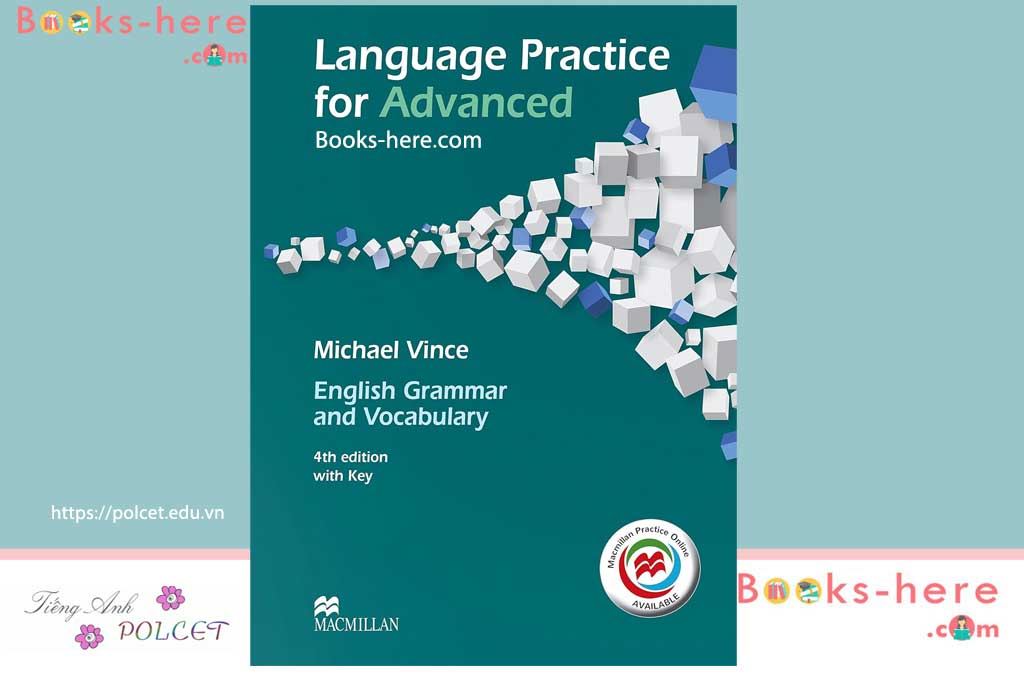
Language Practice for Advanced (often called “Vince” by teachers) is widely considered a staple resource in English Language Teaching (ELT). But is it still relevant in 2024? Is it better than competitors like Destination C1/C2? If you are preparing for the Cambridge C1 Advanced (CAE) exam or simply trying to bridge the difficult gap between Upper-Intermediate and Proficiency, you have likely heard of Michael Vince.
Bridging the gap between an Upper-Intermediate (B2) plateau and an Advanced (C1) level is notoriously difficult. Here is an objective, expert breakdown of what this book actually delivers and how to use it effectively.
In this review, we break down the structure, content, and usability of this grammar and vocabulary classic to help you decide if it belongs on your bookshelf.
POLCET – the best English center in Hanoi, Vietnam
At a Glance: The Basics
-
Title: Language Practice for Advanced (4th Edition is the most common current standard)
-
Author: Michael Vince
-
Publisher: Macmillan
-
Target Audience: C1 Level Learners (CEFR), CAE Candidates, University Students.
-
Best For: Self-study grammar drills and vocabulary expansion.
Most intermediate textbooks treat grammar and vocabulary as two completely separate entities. You learn the “Past Perfect” on Monday and “Environment Vocabulary” on Tuesday.
From an advanced pedagogical standpoint, this separation stops working at the C1 level. Michael Vince’s book excels because it embraces Lexical Grammar. It understands that advanced English is about collocations (which words naturally pair together), phrasal verbs, and idiomatic structures. The book forces you to look at how grammar and vocabulary interact in real, sophisticated contexts.
How the Book is Structured
Michael Vince allows for a very systematic approach to learning. The book Language Practice for Advanced does not need to be studied linearly, but its structure is logical:
-
Grammar Units: Detailed explanations followed by various exercises.
-
Vocabulary Units: Topic-based vocabulary (e.g., Money, Health) and lexical patterns (e.g., Phrasal Verbs, Collocations).
-
Consolidation Units: Every few units, there is a “Review” section that tests everything you’ve learned in the previous chapters using exam-style formats.
The Pros: Why Learners Love It


- Design