

Navigating the graded world of Oxford Bookworms stages offers English learners a structured and rewarding pathway toward genuine reading fluency. Many students want to read authentic English literature but quickly become discouraged when encountering complex grammar and obscure vocabulary. Graded readers bridge that gap by re-telling famous stories using strictly controlled language frameworks that build confidence naturally without causing intellectual exhaustion.
The Oxford Bookworms Library separates its books into progressive levels, beginning with simple starter stories and progressing up through advanced literary adaptations. When you choose the right tier, you can read comfortably without constantly reaching for a dictionary. By understanding how headwords, sentence structures, and grammar rules expand across stages, you can easily target your current capability and advance smoothly toward unadapted novels.
This guide explores the middle and upper tiers, specifically detailing stage 2 through stage 6. You will discover how vocabulary ranges correspond with international benchmarks, explore notable classic titles, and learn practical self-assessment techniques. With this knowledge, you can select books that both entertain you and steadily expand your practical command of everyday English communication.
Key Takeaways
- Systematic Levels: Each stage systematically restricts vocabulary headwords to ensure natural comprehension without burnout.
- CEFR Alignment: Books seamlessly map from elementary A2 benchmarks through sophisticated upper-intermediate B2 and C1 competencies.
- Reading Comfort: Applying the five-finger rule ensures you maintain a fluent ninety-eight percent comprehension pace.
- Literary Transition: Higher stages bridge the gap between adapted classroom material and authentic modern English fiction.
At a Glance
| Target Audience | English language learners from Elementary to Upper-Intermediate |
| Framework | Graded reader series aligned with CEFR bands A1 to C1 |
| Focus Skills | Reading comprehension, extensive vocabulary growth, and listening fluency |
| Core Format | Adapted classic literature, modern fiction, and non-fiction narratives |
| Audio Availability | Synchronized audio editions and CD packages for shadowing practice |
Understanding Oxford Bookworms Stages and CEFR Levels
The primary purpose of the Oxford Bookworms stages framework is to provide language learners with an accessible path toward extensive reading. Graded readers are not simply shortened stories; professional linguists carefully re-craft them to control syntactic complexity and lexical density. By restricting the total number of unique headwords introduced on each page, these books allow learners to follow storylines smoothly and assimilate new grammatical patterns through context rather than memorization.
Understanding how the official Oxford Bookworms stages map onto the Common European Framework of Reference helps you establish clear learning milestones. Lower tiers correspond to introductory A1 and A2 bands, where readers absorb foundational sentence architecture and high-frequency functional words. As you move into higher tiers, the texts introduce compound sentences, passive structures, and abstract vocabulary that directly prepare you for standard examinations like IELTS, Cambridge Main Suite, or TOEFL.
The system relies on headword counts to define difficulty. A headword represents a base vocabulary term along with its common inflections, meaning that seeing a word like 'decide' assumes familiarity with 'decides', 'decided', and 'deciding'. In the earlier stages, these headwords cover fundamental daily life, concrete actions, and standard descriptive adjectives. As the stages increase, books incorporate idiomatic phrasing, subtle stylistic expressions, and culturally specific terminology.
Selecting the correct level requires honesty regarding your comfortable reading pace. When an English learner picks a book that presents ten unfamiliar words in every sentence, comprehension collapses into frustrating translation work. Language acquisition research shows that optimal reading occurs when a student recognizes roughly ninety-eight percent of the words effortlessly. This comfortable zone allows your brain to deduce unfamiliar expressions from narrative context while maintaining an enjoyable reading rhythm.
Extensive reading using graded readers reinforces passive vocabulary and converts it into active working knowledge. Rather than analyzing single sentences with grammar charts, you absorb correct prepositions and verb tenses across complete narrative arcs. As you move upward through each stage, you develop natural reading speed, refine internal pronunciation, and cultivate instinctive grammatical accuracy that benefits both written communication and everyday conversational fluency.
- Headword Control: Strict vocabulary limits guarantee that learners meet familiar patterns repeatedly in different narrative settings.
- Syntactic Progression: Sentence length and structural complexity grow gradually to prevent cognitive overload.
- Natural Context: New terminology appears inside engaging narratives rather than isolated, sterile vocabulary lists.
Oxford Bookworms Stage 2 for Elementary Readers
Readers ready to venture past basic phrasing will discover dependable stepping stones within Oxford Bookworms stage 2. This level is specifically engineered for elementary and pre-intermediate students who possess a foundational grasp of basic English but need exposure to sustained storytelling. With an operating threshold of around seven hundred headwords, books in this tier permit fuller character development and richer plot pacing than beginner primers allow.
Grammar expectations in Oxford Bookworms stage 2 align closely with the CEFR A2 framework. Sentences at this level regularly employ the simple past tense, introductory continuous forms, and basic modal auxiliaries like could, must, and should. You will also encounter coordinating conjunctions such as because, although, and while, which link simple clauses into balanced thoughts without generating overwhelming syntactic tangles.
Exploring an Oxford Bookworms stage 2 title helps learners conquer narrative past tenses naturally. Many adult learners understand regular and irregular verbs in theory but stumble when processing them quickly during continuous reading. Because these books depict historical adventures, mysteries, and folk legends, they immerse the reader in continuous past-tense prose, cementing irregular verb patterns and time expressions effortlessly.
Classic titles at this stage demonstrate how satisfying simplified narratives can be. A notable favorite is Sherlock Holmes Short Stories, where Sir Arthur Conan Doyle's famous detective conducts logical investigations using straightforward, concise dialogue. Another enduring adaptation is Robinson Crusoe, which turns survival themes and practical resource management into accessible, high-interest reading that motivates learners to finish entire chapters in one sitting.
For students preparing for basic international certifications, spending time in Oxford Bookworms stage 2 builds indispensable stamina. If you can read twenty pages at this level without fatigue, your comprehension speed and sight-recognition of foundational English vocabulary will improve dramatically. This prepares your mind for longer narrative arcs, deeper emotional dialogues, and the lexical jumps waiting in subsequent levels.
- Target Vocabulary: Controlled at approximately seven hundred headwords, perfectly matching early CEFR A2 competencies.
- Grammar Scope: Focuses on past tenses, basic modal verbs, direct speech, and simple comparative adjectives.
- Recommended Reading: Sherlock Holmes Short Stories, Robinson Crusoe, and The Children of the New Forest.
Oxford Bookworms Stage 3 and Intermediate Milestones
Reaching the threshold of Oxford Bookworms stage 3 marks an exciting breakthrough for language learners. At this intermediate junction, the available vocabulary expands to approximately one thousand headwords, matching the expectations of the CEFR B1 level. This expanded lexical range enables writers to preserve the nuanced emotional tone, subtle humor, and atmosphere of the original source material without imposing prohibitive barriers.
A major stylistic advancement within Oxford Bookworms stage 3 is the natural integration of conditional clauses, perfect tenses, and introductory passive verb constructions. Instead of simple chronological sequences, stories begin utilizing flashbacks, multiple character perspectives, and psychological reflections. As a result, reading becomes an immersive literary journey rather than an analytical language study drill.
Among the standout titles, Oxford Bookworms stage 3 The Secret Garden stands out as an exceptional example of expressive language teaching. The narrative introduces descriptive nature vocabulary, emotional evolution, and thematic depth while remaining entirely transparent to a B1 student. Readers experience Mary Lennox's gradual personal transformation through carefully scaffolded prose that showcases evocative adjectives and conversational idioms.
Another compelling highlight in the Oxford Bookworms stage 3 catalog is Mary Shelley's Frankenstein. This adaptation captures the moral dilemmas, philosophical loneliness, and scientific obsession of the classic masterpiece using accessible prose. Learners who previously thought nineteenth-century gothic literature was completely beyond their reach find themselves captivated by the monster's tragic reflections and Victor Frankenstein's mounting terror.
Committing to multiple books in Oxford Bookworms stage 3 solidifies your functional reading independence. This tier functions as the pivot point where English stops feeling like a school subject and starts feeling like an authentic medium for entertainment. Once you complete several titles here with comfortable comprehension, you possess the structural base necessary to conquer upper-intermediate materials.
- Vocabulary Threshold: Encompasses one thousand headwords, serving as the benchmark standard for solid CEFR B1 readers.
- Syntactic Richness: Introduces present perfect tenses, conditional phrasing, and expressive descriptive clauses.
- Must-Read Highlights: Oxford Bookworms stage 3 The Secret Garden, Frankenstein, and Tales of Mystery and Imagination.
Oxford Bookworms Stage 4 for Advancing Fluency
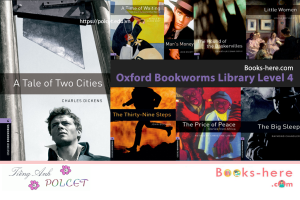
As readers transition toward the upper-intermediate threshold, Oxford Bookworms stage 4 provides the ideal bridge to adult prose. With a lexical foundation of fourteen hundred headwords, this tier corresponds directly with the B1 and B2 borderline. Stories at this level abandon simplified storytelling conventions in favor of complex plot structures, psychological depth, and culturally authentic expressions.
In Oxford Bookworms stage 4, sentence structures reflect genuine literary prose while retaining controlled readability. Readers encounter past perfect tenses, sophisticated passive voice, relative defining clauses, and diverse phrasal verbs. Paragraphs become longer, narrative viewpoints shift frequently, and character dialogue reflects authentic social nuance, sarcastic irony, and regional idioms that mimic real-world interactions.
A premier selection in Oxford Bookworms stage 4 is Sir Arthur Conan Doyle's The Hound of the Baskervilles. This haunting detective thriller uses suspenseful atmospheric descriptions of foggy moors and mysterious tracks to captivate readers. Because the narrative relies on logical deduction and subtle witness testimonies, readers practice critical comprehension while expanding their command of investigative terminology.
Another vital title is Robert Louis Stevenson's The Strange Case of Dr Jekyll and Mr Hyde, available in Oxford Bookworms stage 4 books collections. This psychological horror tale challenges readers with dual identities, ethical boundaries, and gothic urban mystery. For learners who enjoy political dystopia, the adapted edition of George Orwell's 1984 within Oxford Bookworms stage 4 offers an unforgettable examination of surveillance, language control, and societal manipulation.
Reading consistently in Oxford Bookworms stage 4 develops the stamina required for modern standardized tests. When tackling reading sections in academic exams, students must quickly interpret main ideas, infer author intentions, and analyze tonal shifts. Practicing with full-length mystery and adventure novels at this stage creates automatic word parsing, which reduces cognitive strain under strict exam conditions.
- Lexical Expansion: Expands to fourteen hundred headwords, guiding readers comfortably into upper B1 and lower B2 levels.
- Narrative Depth: Features layered storylines, indirect reported speech, and sophisticated character reflections.
- Key Titles: The Hound of the Baskervilles, Dr Jekyll and Mr Hyde, and George Orwell's 1984.
Oxford Bookworms Stage 5 and Stage 6 Upper-Intermediate Mastery
The highest levels of the series present an engaging combination of challenging literature and refined language structures. In Oxford Bookworms stage 5, learners work with approximately eighteen hundred headwords, which corresponds directly with a confident CEFR B2 level. Here, texts preserve the thematic complexity and poetic cadence of legendary novelists, giving students an authentic taste of historic and contemporary storytelling.
Stepping up from Oxford Bookworms stage 5 into stage 6 elevates the lexical ceiling to twenty-five hundred headwords, reaching toward advanced C1 capabilities. At stage 6, adaptations introduce archaic descriptive elements, intricate subplots, and specialized academic vocabulary. The sentences mirror natural authorial voices, requiring readers to interpret subtle satire, metaphorical imagery, and complex rhetorical patterns without simplified crutches.
A standout masterpiece in Oxford Bookworms stage 5 is Charles Dickens's Great Expectations. This narrative tracks Pip's journey across Victorian society, examining themes of wealth, loyalty, and redemption. The adaptation preserves Dickens's distinctive humor, character quirks, and social critique, allowing intermediate students to appreciate classic British literature without drowning in Victorian sentence lengths.
Meanwhile, stage 6 offers Jane Austen's celebrated romantic classic, Pride and Prejudice. Capturing Austen's famous wit, sharp social observations, and complex ironic interactions requires a rich vocabulary. By tackling this stage 6 adaptation, learners master delicate social banter, historical etiquette expressions, and sophisticated character development that closely resembles unadapted literary fiction.
Learners often wonder when they should step away from Oxford Bookworms stage 5 and stage 6 to pursue authentic paperbacks. Once you can read an entire stage 6 novel smoothly with ninety-five percent comprehension, you possess the foundational tools to tackle modern bestsellers, popular thrillers, and contemporary non-fiction. These final stages serve as the ultimate launching pad into lifelong, independent English reading.
- Stage 5 Benchmarks: Eighteen hundred headwords at CEFR B2; excellent for mastering complex social themes and idioms.
- Stage 6 Benchmarks: Twenty-five hundred headwords bridging B2 and C1; preserves intricate prose and literary style.
- Flagship Adaptations: Great Expectations in stage 5, and Pride and Prejudice or Oliver Twist in stage 6.
Navigating Oxford Bookworms Stages with the Five-Finger Rule
Finding the correct level among the Oxford Bookworms stages is essential for establishing an enjoyable, productive reading routine. Many motivated students mistakenly pick books far above their current linguistic level, assuming that struggling through complex sentences yields faster progress. In reality, hitting an overwhelming wall of unfamiliar terms produces cognitive exhaustion, kills reading pleasure, and reinforces slow, mechanical word-by-word mental translation.
A practical, time-tested strategy for evaluating any book across the Oxford Bookworms stages is the five-finger rule. To use this technique, open your prospective book to any random page near the middle and begin reading naturally. Each time you stumble over an unfamiliar word that you cannot comprehend from context, hold up one finger. This simple visual assessment tells you immediately whether the stage matches your needs.
If you encounter zero or one unfamiliar word on that page, the book is comfortable and suitable for relaxed, high-speed reading. If you raise two or three fingers, you have found an optimal sweet spot for balanced language acquisition. At this level, you can follow the narrative easily while picking up fresh vocabulary organically. However, raising four or five fingers indicates that the stage is currently too difficult.
Choosing a book that is slightly too easy is consistently better than choosing one that is too hard. Reading smoothly builds syntactic rhythm, reinforces familiar grammar rules, and develops rapid word-recognition skills. When you glide through twenty pages without stopping, your brain learns to think directly in English rather than translating into your native language.
Re-evaluate your placement across the Oxford Bookworms stages every few months. Extensive reading creates noticeable compounding gains; after completing three or four titles at your current tier, you will notice unfamiliar words disappearing. When a stage feels effortless and you never need to raise more than one finger per page, you are officially ready to advance to the next level.
- Zero to One Finger: Pleasure reading zone; reinforces speed, confidence, and grammatical intuition effortlessly.
- Two to Three Fingers: Optimal learning target; delivers perfect balance between narrative enjoyment and lexical growth.
- Four to Five Fingers: Instructional frustration zone; step down one stage to protect reading momentum.
Effective Study Habits for Oxford Bookworms Stages
To extract maximum educational value from the Oxford Bookworms stages, you must adopt proven extensive reading techniques. Extensive reading emphasizes reading large volumes of text for general meaning and narrative enjoyment rather than treating every sentence like a grammar puzzle. The cardinal rule of extensive reading is to resist the urge to pause and search for every unfamiliar word in a dictionary.
Stopping frequently to check translations breaks the emotional momentum of the story and overloads working memory. Instead, underline intriguing expressions lightly with a pencil and continue following the narrative arc. In most cases, the surrounding sentences provide sufficient clues to infer meaning. You can revisit marked expressions after completing the chapter to look up nuances in a reliable English learner's dictionary.
Pairing your paperback or digital edition with synchronized audio elevates language retention across the Oxford Bookworms stages. Oxford produces professional audio recordings for its graded reader library, featuring expressive voice acting and natural native cadences. Listening while following along visually reinforces accurate pronunciation, connects written spelling to spoken sounds, and prevents bad subvocalization habits.
You can also utilize the recorded audio for shadowing exercises to boost spoken English fluency. Select a dramatic paragraph, listen carefully to the narrator's intonation and sentence stress, and speak the lines aloud simultaneously. This multi-sensory practice refines your vocal rhythm, reinforces sentence patterns, and bridges passive reading comprehension with active spoken fluency.
Acquiring these books legally is simple and budget-friendly. You can purchase physical paperbacks through major educational retailers, university bookshops, and reputable online book stores. Furthermore, modern digital library applications such as Libby or OverDrive allow users to borrow graded reader ebooks and audiobooks legally through participating school, public, or university library networks worldwide.
- Extensive Flow: Prioritize narrative comprehension over compulsive vocabulary lookup to build natural reading velocity.
- Audio Shadowing: Listen to official voice recordings while speaking along to internalize rhythm and intonation.
- Legal Access: Acquire paperback editions from verified booksellers or borrow digitally via library networks.
Pros & Cons
Pros
- Precise Grading: Meticulously controlled headwords and grammar frameworks guarantee clear progression across CEFR bands.
- Literary Variety: Features diverse genres ranging from gothic horror and classic detective mysteries to modern original fiction.
- Audio Integration: Accompanying native-speaker audio allows simultaneous reading and listening practice.
Cons
- Abridged Plots: Certain subplots and minor character interactions in famous classics are condensed to fit word count limits.
- Vocabulary Ceilings: Advanced learners approaching C2 fluency will find the vocabulary ceiling in stage 6 somewhat restrictive.
Who Should Buy This Book?
✓ Great for
- Intermediate English learners wanting to read authentic literary classics without frustration
- Test candidates preparing for IELTS or Cambridge exams who need to build sustained reading stamina
- Self-directed students seeking an affordable, graded reading framework with audio support
✗ Not the best fit for
- Absolute beginners who have not yet mastered the English alphabet or basic everyday greetings
- Advanced bilingual speakers who already comfortably consume unadapted contemporary English literature
Where to Get the Book
- Oxford University Press ELT Store: Find official graded readers, complete catalog sets, and digital companion resources directly from the publisher.
- Local Educational Bookstores: Browse physical paperbacks in specialized foreign language sections of university or national chain bookstores.
- Public Libraries via Libby / OverDrive: Borrow digital copies and audio editions legally through your institutional or local public library card.
Tip: you can often borrow it from a library (Libby/OverDrive) or your English center before buying.
Final Verdict
Understanding the design behind the Oxford Bookworms stages transforms language learning from an intimidating chore into a deeply enjoyable daily habit. By choosing the exact stage matching your current CEFR level, applying the five-finger rule, and following extensive reading practices, you can expand your vocabulary organically, master complex grammatical phrasing, and build the durable confidence required to read unadapted English novels with total pleasure.
POLCET – the best English center in Hanoi, Vietnam
Useful Resources
- Oxford University Press – English Language Teaching – Explore the official graded reader catalog, syllabus guides, and sample chapters directly from Oxford University Press.
- Libby – borrow ebooks from your library – Access and borrow digital ebooks and audiobooks of graded readers for free through participating public library cards.
- Council of Europe – CEFR levels – Review official Council of Europe descriptors to evaluate your reading and communicative proficiency benchmarks.
Frequently Asked Questions
What CEFR level is Oxford Bookworms Stage 3?
Oxford Bookworms Stage 3 corresponds directly to the CEFR B1 level. At this stage, books utilize a controlled vocabulary of one thousand headwords. The stories introduce compound sentences, introductory passive verbs, and past continuous tenses, making it the perfect milestone for intermediate learners looking to build real reading stamina.
How many vocabulary words are in Oxford Bookworms Stage 4?
Oxford Bookworms Stage 4 contains approximately fourteen hundred headwords, placing readers along the transition between CEFR B1 and B2. This vocabulary depth allows for nuanced character dialogue, detailed scene descriptions, and sophisticated genre narratives such as detective mysteries and psychological thrillers without overwhelming the reader with obscure terms.
Should I look up every unknown word when reading Oxford Bookworms?
No, you should not look up every unknown word while reading. Stopping constantly disrupts narrative immersion and causes mental fatigue. Instead, try to deduce the meaning from context, pencil an underline beneath unfamiliar terms, and continue reading. You can check a dictionary after finishing the chapter if the word remains unclear.
Is Stage 6 close to reading an unadapted English novel?
Yes, Stage 6 is very close to reading an authentic, unadapted English novel. With twenty-five hundred headwords and advanced grammatical structures, books at this tier preserve the stylistic tone, subtle irony, and rhetorical elegance of original literature, serving as a reliable springboard into modern bestsellers and classics.




0 Comments